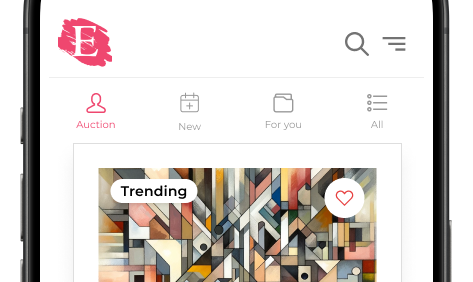
Esthetiq Product Design In the Esthetiq project, I dedicated my efforts to designing a new product centered around the arts, aiming to help young artists accelerate their careers. Acknowledging the challenges that emerging artists face in gaining visibility and opportunities, I conducted comprehensive user research to uncover their specific needs and pain points. This research involved interviews, surveys, and market analysis to gather deep insights into the artists‘ experiences and expectations. Project Type School Project Areas UX/UI Research UX/UI Design Figma Prototype Leveraging the findings from the research, I prototyped and designed an app tailored to address these needs. The app was developed with features that facilitate networking, portfolio showcasing, and access to resources that young artists require to thrive in the industry. To ensure the app’s effectiveness and usability, I carried out user testing with actual artists, gathering feedback that was instrumental in refining the final design. This user-centric approach not only resulted in a functional and intuitive app but also provided valuable insights that helped young artists connect with opportunities to boost their careers.
Trainhora Product Design – Master Thesis
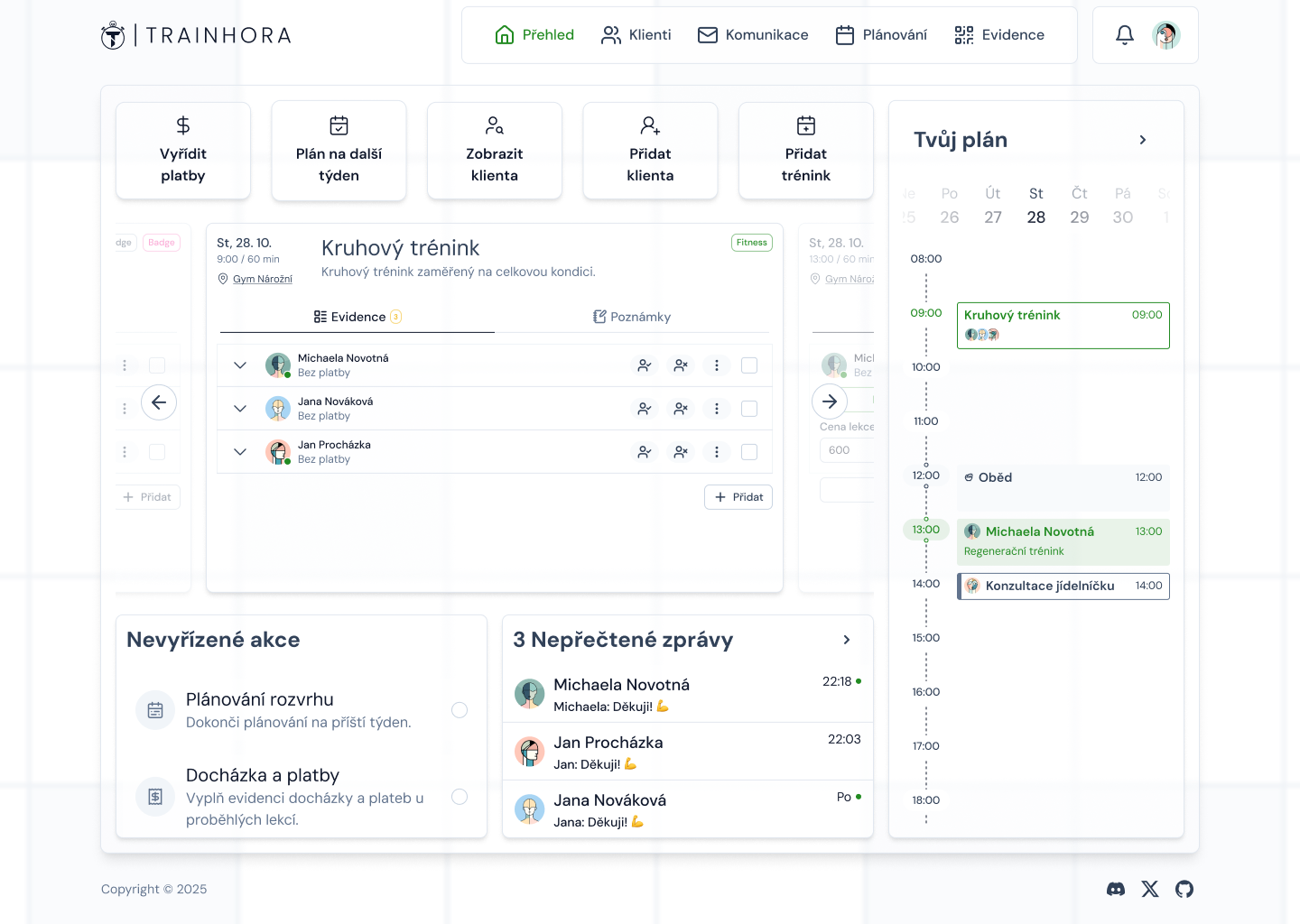
Trainhora Product Design Project which was a part of my master thesis. I made complete product MVP prototype from scratch. From research to design, prototype and testing. Project Type School Commercial Project Areas UX Research UI Research Figma Prototype This thesis focuses on designing a digital product that supports the work organization of personal fitness trainers. It assumes that a significant proportion of trainers rely on fragmented tools and repeatedly deal with administrative tasks related to scheduling training sessions, communicating with clients, tracking attendance, or managing payments. The aim of this thesis is to identify the key problems, needs, and obstacles trainers encounter in these activities and, based on these findings, propose a digital solution that reflects their working processes. The methodological framework of the thesis is grounded in the principles of design thinking. The process involves a literature review and a market analysis of existing tools for scheduling, client management, and fitness services. The main part of the research consists of eight in-depth interviews with personal trainers, whose outputs were analysed using open and axial coding. Based on thematic clusters, problem areas were defined, HMW questions were formulated, and design directions were identified and subsequently prioritised using the Impact–Effort method. From these outputs, the functionalities of the MVP product were determined. This phase was followed by the creation of an information architecture, user flows, and several prototype iterations, which were continuously evaluated through internal review and later verified through moderated user testing. The research revealed several recurring problem areas, particularly in schedule planning and changes, client information management, attendance tracking, payment administration, and client communication. Key trainer needs were also identified, especially those related to clarity, data centralisation, and reducing manual tasks. These findings informed the definition of the main design directions and the prioritisation of functionalities for the future solution. The outcome of the thesis is a comprehensive design of a digital tool that addresses the identified problems and reflects the needs uncovered in the research. The resulting concept was developed through multiple design iterations and provides a foundation for further development and implementation into a fully functional application.
POC module for Insurance Advisors
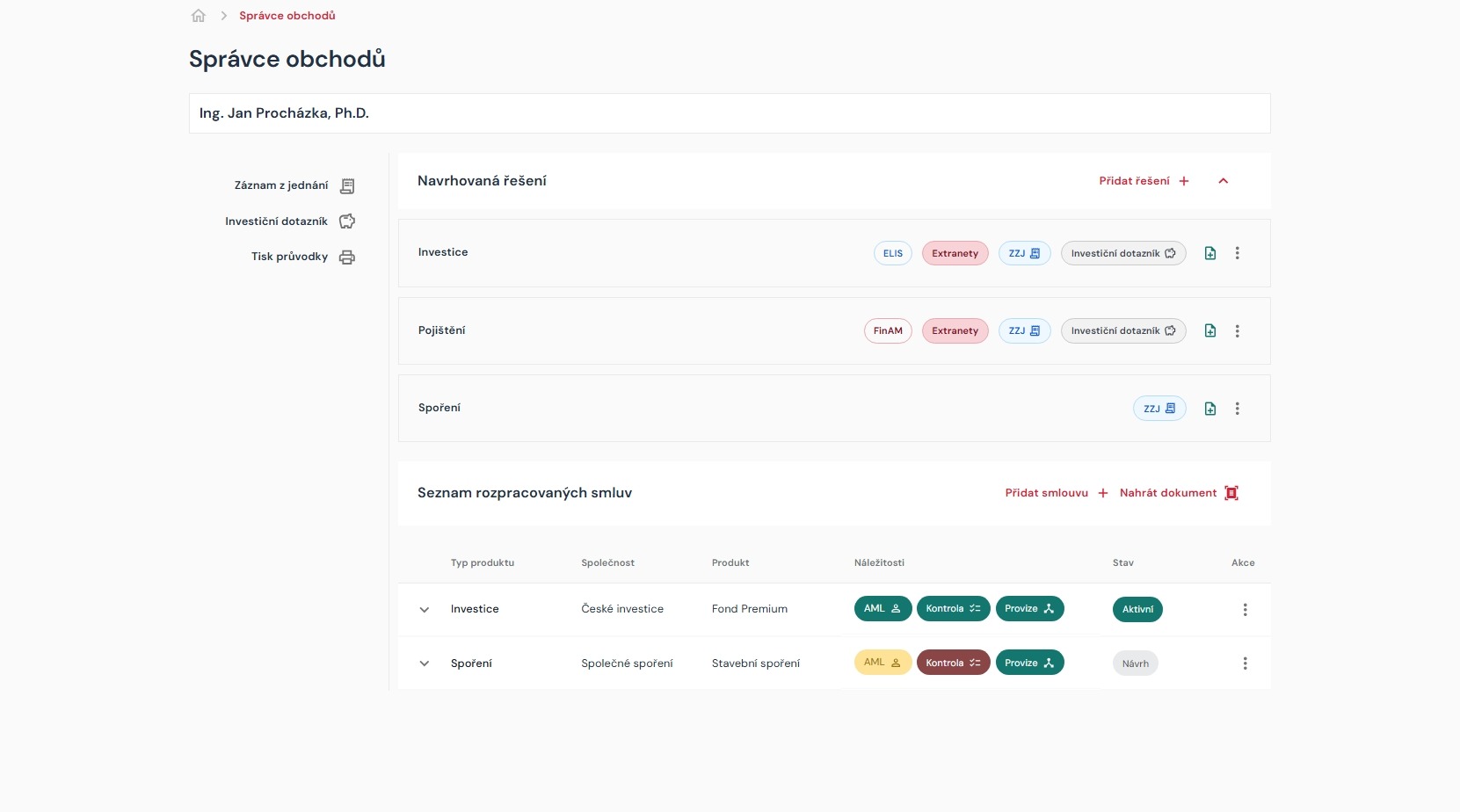
POC module for Insurance Advisors In cooperation with Blogic and Swiss Life Select, I have build a minimal MVP POC app for Insurance Advisors, where they manage contracts to negotiate, view progress, send to signature and so on. Project Type Commercial Project Areas UX Design React MVP Development This project was developed using a modern React (v19) and TypeScript architecture powered by Vite and Bun for fast development and builds. The application utilizes MUI with Emotion for a fully customized design system, React Hook Form with Zod for reliable form handling, React Query (with persistence) for efficient data fetching, and i18next for multilingual support. State management is handled via Zustand, while tooling such as Biome, SWC, and automated API type generation ensures a clean and consistent codebase. The project also integrates Sentry for monitoring and robust error tracking. Alongside the technical implementation, I collaborated closely with internal analysts to design intuitive UX/UI flows—translating business requirements into clear user journeys, wireframes, and component structures that supported both usability and stakeholder expectations.